







Practice for your IQ test
Prepare for IQ tests used in job applications and military recruitment. Practice with the same type of questions and get ready for the real test.
- Practice for job & military tests


Practice for job and military IQ tests






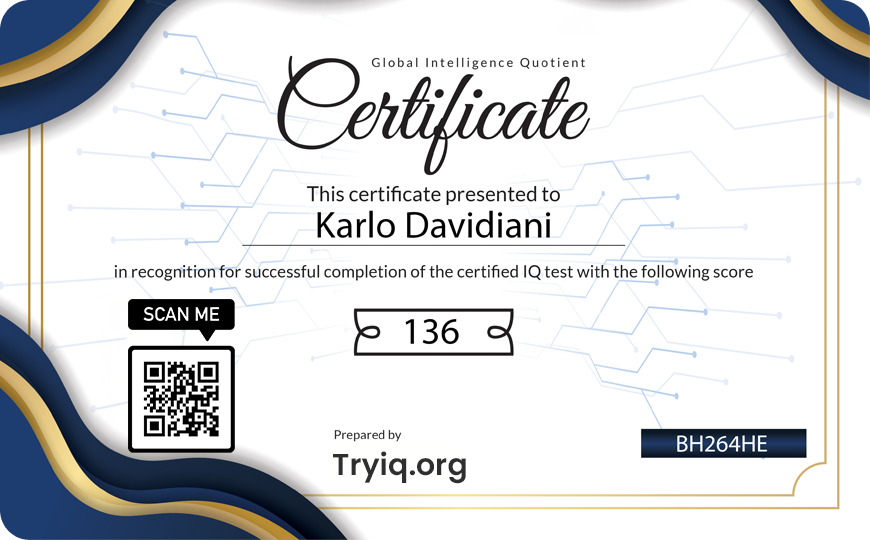
Get an IQ certificate after practice
After practising, you can take the full test and get a certificate for your own use
Prepare for job and military IQ tests
Employers and the military often use IQ tests in their selection. Here you can practise with similar questions so you're ready when it counts.
Use our practice tests to get familiar with the format and question types. When you're ready, take the full test and get your score and an optional certificate.
- Practice for the real test
- Same type of questions as job & military tests
Practise for job and military tests
Practise with IQ-style questions so you're ready for tests used in job applications and military recruitment. Get used to the format and improve your speed.
When you're prepared, take the full test and see your score. You can also get a certificate for your own use. Focus on practising first – the real test is the one you take for the job or the military.


40%

Resuction in time

92%
Success rate

IQ test & jobbsøk
Spørsmål om å trene til IQ-tester i rekruttering?
Mange bedrifter og rekrutterere bruker IQ-tester for å vurdere logisk tenkning, problemløsning og evne til å lære raskt. Testene brukes ofte sammen med andre metoder (CV, intervju) for å få et mer objektivt bilde av kandidater. Å kjenne formatet og trener på lignende oppgaver hjelper deg å prestere bedre når det gjelder.
Ja. Å øve på mønstergjenkjenning, logikk og tidsstyrte oppgaver gjør at du blir tryggere og raskere på den faktiske testen. Mange som trener opplever bedre resultater fordi de kjenner oppgavetypene og jobber under tidspress. TryIQ er laget nettopp for å forberede deg før rekrutteringstester.
Typiske elementer er: tallrekker, figuroppgaver, mønstergjenkjenning, logiske serier og noen ganger verbale eller numeriske resonnement. Oppgavene er ofte tidsbegrenset. Ved å øve på lignende oppgaver her blir du vant til både format og tempo før den virkelige testen.
Det varierer, men mange tester tar rundt 15–30 minutter. Noen har streng tidsbegrensning per oppgave eller per del. Full test hos oss (25 spørsmål, tidsstyrt) gir deg god trening i å jobbe under tid og fullføre en hel test.
Ja. Å bli kjent med oppgavetyper og arbeide under tidspress reduserer stress og forbedrer ofte prestasjonen. Du utvikler strategier og blir raskere på å gjenkjenne mønstre. Derfor anbefaler vi å bruke øvingssenteret og full test før du møter en reell rekrutteringstest.
TryIQ gir deg øvingsoppgaver med forklaringer, en full tidsstyrt test som ligner på mange rekrutteringstester, og mulighet til å se resultater og forbedring over tid. Du kan trene når det passer deg og møte den virkelige testen bedre forberedt.